Ph.D. Researcher — accessible, trustworthy, and privacy-aware GenAI

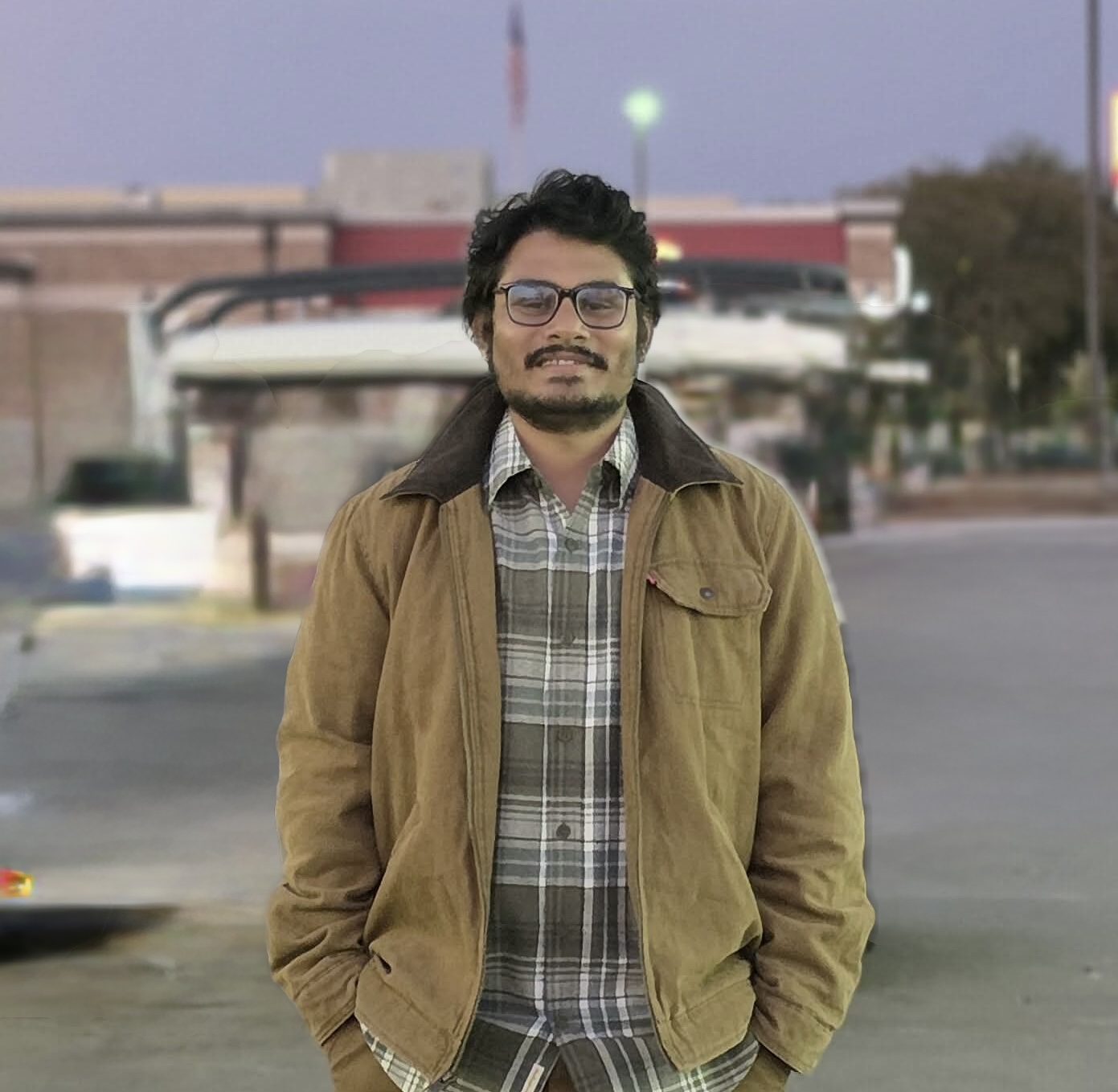
Protik Dey

I am a Ph.D. student in Computer Science at the University of Texas at San Antonio (UTSA) working in APEX Lab led by Dr. Taslima Akter. Prior to starting my Ph.D. at UTSA, I worked for three years as a full-stack developer at Kona Software Lab Ltd.

My research centers on making generative AI genuinely usable for blind and low-vision (BLV) people, not just technically available, but accessible, trustworthy, and privacy-aware in everyday interaction. Generative AI is increasingly woven into how people write, search, navigate, and get things done, yet these tools are rarely designed with BLV users in mind. I study how BLV people actually experience these systems: where interactions break down with assistive technology, what makes a response feel dependable or doubtful, and how people weigh the convenience of AI assistance against control over their personal information. In short, my work asks a simple question with a hard answer: how does trust actually form, and break, when BLV users rely on generative AI for everyday tasks?

I received my B.Sc. (Engg.) in Computer Science and Engineering from Bangladesh University of Engineering and Technology (BUET). I completed my undergraduate thesis under the supervision of Dr. Muhammad Masroor Ali on Malicious Code Detection and Analysis.

News

  • Apr 2026 Paper on explainable AI accepted at the CHI 2026 Workshop on Human-Centered Explainable AI (HCXAI). Read here.
  • Apr 2026 Volunteered with Vibrant Works, a San Antonio nonprofit serving people with vision loss, at their Fiesta event.
  • Feb 2026 Presented a poster on trustworthy GenAI use among blind and low-vision people at NSF AI Spring School 2026. See here.
  • Aug 2024 Started Ph.D. in Computer Science at UTSA.
  • Aug 2021 Joined Kona Software Lab.
  • Mar 2021 Graduated with a B.Sc. in Computer Science and Engineering from BUET.
  • Oct 2020 Paper on malicious code detection accepted at ICECE 2020. Read here.
  • Dec 2019 Presented a poster on throughput analysis of highly dense terahertz communication network at NSysS 2019. See here.

Publications

Abu Noman Md Sakib, Protik Dey, Zijie Zhang, Taslima Akter, Explainable AI for Blind and Low-Vision Users: Navigating Trust, Modality, and Interpretability in the Agentic Era. Proceedings of the CHI 2026 Workshop on Human-Centered Explainable AI (HCXAI), Apr 2026. Paper

Protik Bose Pranto, Syed Zami-Ul-Haque Navid, Protik Dey, Gias Uddin, Anindya Iqbal, Are You Misinformed? A Study of COVID-Related Fake News in Bengali on Facebook arXiv preprint, 2022. Paper

Syed Zami-Ul-Haque Navid, Protik Dey, Shamiul Hasan, and Muhammad Masroor Ali, Static Detection of Malicious Code in Programs Using Semantic Techniques. 11th International Conference on Electrical and Computer Engineering (ICECE), 2020. Paper

Nirob Arefin, Protik Dey, and A.B.M. Alim Al Islam, Throughput Analysis of Highly Dense Terahertz Communication Network. 6th International Conference on Networking, Systems and Security (NSysS), 2019. Poster

Research Projects

Trustworthy, Privacy-Aware, and Accessible Generative AI for Blind and Low-Vision Users

This ongoing project investigates how blind and low-vision (BLV) people build, calibrate, and lose trust in generative AI tools they rely on for everyday tasks. Through interviews and study sessions with BLV participants, I examine how consistency across sessions, compatibility with assistive technology, and control over personal data shape whether these tools feel dependable. The goal is to translate these findings into concrete interaction design guidance so that generative and agentic AI systems are built with accessibility, trust, and privacy as foundations rather than afterthoughts.

  • Human-Centered AI
  • Accessibility
  • Trust
  • Privacy
Ongoing

Explainable AI for Blind and Low-Vision Users

As generative AI systems take on more autonomous, multi-step tasks, understanding why a system did what it did becomes critical, especially for users who cannot visually verify a system's actions. This project examines how explainability should be designed and communicated for BLV users navigating agentic AI, considering modality (how explanations are conveyed non-visually) and interpretability (what level of detail is useful versus overwhelming) as central design questions.

  • Explainable AI
  • Accessibility
  • Agentic AI
Ongoing

Financial Abuse of Older Adults in Digital Financial Systems

Financial abuse of older adults is a growing but often overlooked concern in today's increasingly digital financial landscape. Older adults face unique challenges related to access, trust, and protection, which can leave them vulnerable to exploitation. Addressing these issues is essential for safeguarding financial autonomy and dignity in later life. This line of work aims to promote more inclusive, accessible, and trustworthy financial systems by informing human-centered design and policy decisions.

  • Older Adults
  • Financial Security
  • Inclusive Design
Ongoing

Fake Bengali Facebook Post Detection on COVID-19

This project examined the spread of COVID-19 misinformation in Bengali-language Facebook posts, building a benchmark dataset collected through CrowdTangle. Using transformer-based models trained on this dataset, the study reported on how fake news correlated with audience engagement and reaction, one of the first empirical looks at Bengali-language misinformation during the pandemic.

  • Misinformation
  • NLP
  • Social Media
  • Topic Modeling

Performance Analysis of Highly Dense Terahertz Communication Networks

This project explored network performance in next-generation wireless systems, simulating 5G and beyond-5G communication using NS-3. The work analyzed throughput in highly dense terahertz communication networks, examining how network behavior scales under high-density conditions.

  • 5G Networks
  • Network Simulation
  • NS-3

Malicious Code Detection and Analysis

This project explored detecting malicious intent in programs before they are ever executed. Building on and extending CodeOntology, we expressed the semantic structure of Java source code as an ontology and encoded the characteristic signatures of malware such as the repeated connection calls underlying a DDoS attack. The system successfully identified a known malware from its source code alone, produced human-interpretable explanations of why code was flagged, and remained robust against code obfuscation, where attackers scatter malicious calls across intermediate methods to evade detection.

  • Software Security
  • Static Analysis
  • Ontology
  • Semantic Web

Experience

  1. Jan 2026 – Present · Texas, USA

    Graduate Research Assistant II, University of Texas at San Antonio

    Leading research projects on accessible, trustworthy, and privacy-aware generative AI for blind and low-vision users. Design and conduct user studies with BLV participants, and build research prototypes to evaluate accessible AI interactions — from study design and interviews through qualitative analysis and publication. Mentor undergraduate students on research methods and academic writing.

    Python · Prototyping · User studies · Thematic analysis

  2. Aug 2024 – Dec 2025 · Texas, USA

    Graduate Teaching Assistant, University of Texas at San Antonio

    Teaching assistant for undergraduate courses including Operating Systems and Systems Programming. Graded assignments, projects, and exams, and supported students through office hours on OS concepts and low-level C programming.

    Operating Systems · Systems Programming · C · Unix/Linux

  3. Jan 2023 – Jul 2024 · Dhaka, Bangladesh

    Software Engineer II, Kona Software Lab Limited

    Worked in the Integrated Platform team building global payment solutions. Designed and implemented validation and authorization for financial transactions including recharge and payment flows.

    Spring Boot · Redis · RabbitMQ · MariaDB

  4. Aug 2021 – Dec 2022 · Dhaka, Bangladesh

    Graduate Engineer, Kona Software Lab Limited

    Full-stack developer on the Digital Financial System team, delivering financial transaction solutions for Nagad, Bangladesh's fastest-growing mobile financial system — including tokenized payments, KYC, and bank/card transfers. Also helped stand up the back-office portal for the KONAPLATE project using Angular.

    Spring Boot · Angular · Redis · RabbitMQ · Strapi · Oracle

Education

  1. Aug 2024 – Present · Texas, USA

    Ph.D. in Computer Science, University of Texas at San Antonio (UTSA)

  2. Feb 2016 – Mar 2021 · Dhaka, Bangladesh

    B.Sc. in Computer Science and Engineering, Bangladesh University of Engineering and Technology (BUET)

Skills

HCI & Research Methods

User studies, Thematic analysis, Usability testing, Interactive prototyping, Accessible & inclusive design

Programming & Data

Python, C, C++, Java, JavaScript, TypeScript, Bash, NumPy, Pandas, Scikit-learn, Matplotlib

Engineering Stack

Spring Boot, Django, Angular, Redis, RabbitMQ, Kafka, Hibernate, Oracle, MySQL, PostgreSQL, MongoDB, Git

Professional Services

External Reviewer

  • CHI 2026
  • CSCW 2025, 2026

Volunteering

  • Volunteer at a BLV community event — Vibrant Works, San Antonio, 2026

Mentoring

  • Blessy Kalluri Undergraduate Student, University of Texas at San Antonio Summer 2026
  • Kaylee Chambers Undergraduate Student, University of Texas at San Antonio Spring 2025 - Summer 2025
  • Abhinaya Guduru Undergraduate Student, University of Texas at San Antonio Spring 2025 - Fall 2025

Contact